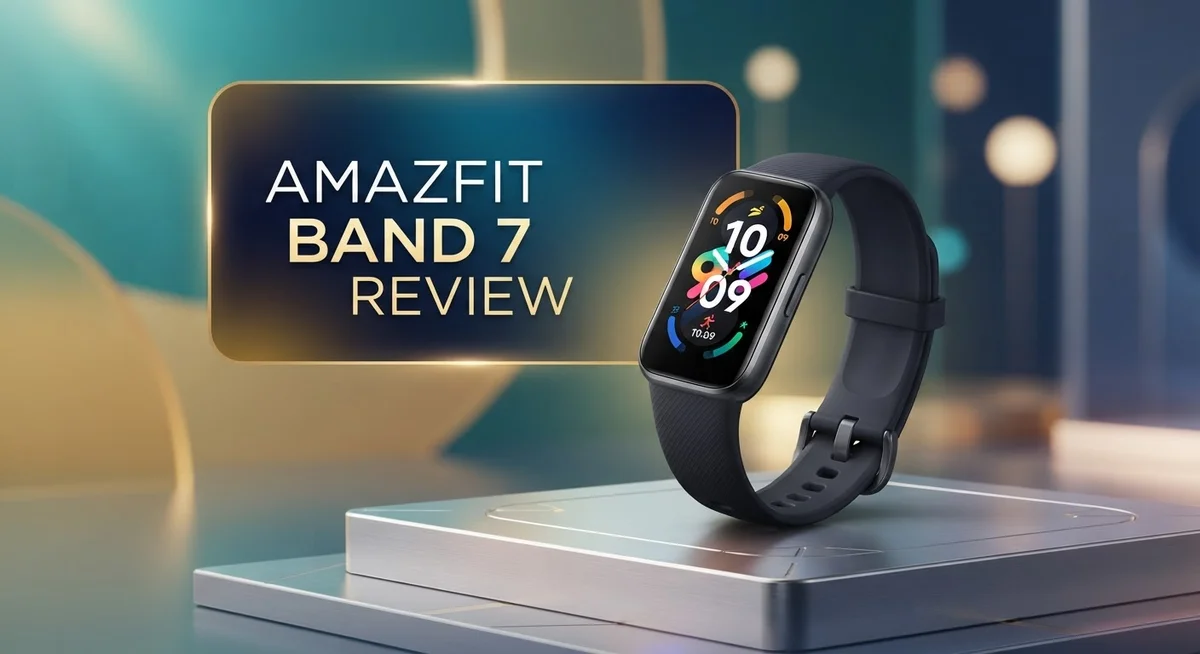
Amazfit Band 7 Review: Is It Worth Trying in 2026?
Looking for a fitness band that does the basics well? The Amazfit Band 7 might catch your eye.
This band packs a 1.47″ AMOLED display into a simple design. It tracks over 120 sports modes and even auto-detects walks and runs.
Sleep tracking works well here. The band also monitors your activity and cardio health throughout the day.
Battery life stands out too. You get up to 18 days of use before you need to charge it again.
But does it compete with bigger names like Fitbit Charge 6? This review breaks down what works and what does not.
We tested the comfort, accuracy, and features. You will find honest thoughts on the pros and cons ahead.
Let’s see if this band fits your fitness goals.
In a Nutshell
Here is the quick rundown of what you get with the Amazfit Band 7:
-
Comfortable fit: You can wear this band all day without irritation. It sits light on your wrist.
-
120+ sports modes: The band auto-detects walks and runs. You don’t need to start tracking manually every time.
-
Sensor accuracy concerns: Some users noticed odd readings during vibration heavy activities. This affects trust in the data.
-
Screen visibility issues: The AMOLED display can be hard to see in bright sunlight. This makes quick glances tricky outdoors.
-
Band fit problems: Putting the band on can feel fiddly. It also tends to slip off during workouts for some users.
-
Software support gaps: There have been no recent software updates. This could limit new features down the line.
Compared to rivals like Fitbit Charge 6 and Samsung Fit 3, the Amazfit Band 7 holds its own on battery life and sleep tracking. But it falls short on build quality and long term software support.
Display and Design
The Amazfit Band 7 sports a 1.47 inch AMOLED display that brings colors to life. This screen size sits right in the sweet spot for fitness trackers. You get enough real estate to read notifications without the bulk of a smartwatch.
The display uses AMOLED technology, which means blacks appear truly black. Colors pop more than LCD screens. However, outdoor visibility remains a weak point. Bright sunlight washes out the content, making it hard to check your stats during daytime workouts.
The band itself follows a classic fitness tracker design. It wraps around your wrist with a simple rubber strap. The form factor feels outdated compared to newer competitors. The design lacks the modern appeal you see on Samsung Fit 3 or Fitbit Charge 6.
Build quality feels solid, but the band has fit issues. Many users report the strap is difficult to put on. The clasp mechanism works, yet it comes loose during active sessions. This means you might need to readjust throughout your day. The band sits comfortably once secured, but getting there requires patience.
The watch face displays time, heart rate, and activity rings at a glance. Navigation happens through side buttons and screen taps. The interface responds quickly to your touches. Menus feel intuitive, so you won’t struggle to find what you need.
Screen brightness adjusts automatically in most conditions. This helps preserve battery life. Still, you’ll want to manually crank it up when you’re outside exercising.
The overall aesthetic works for casual wear. It doesn’t scream premium, but it doesn’t look cheap either. The AMOLED panel gives it a slight edge over budget LCD alternatives. However, the outdated form factor may disappoint those seeking a sleeker look.
If you prioritize screen quality and comfort during wear, the display and design deliver on basics. Just know that outdoor visibility and band durability have room for improvement. The classic design appeals to minimalists but might feel stale if you prefer modern styling.

- Stunning images, smooth touch: Immerse yourself in brilliant clarity with the large 1.72-inch AMOLED display.Vacuum...
- Fast charging, longer adventures: Say goodbye to daily charging hassles! Enjoy an exceptional 21 days of battery life on...
Last update on 2026-10-28 / Affiliate links / Images from Amazon Product Advertising API
Fitness Tracking and Sports Modes
The Amazfit Band 7 delivers solid fitness tracking with over 120 sports modes built in. This means you get options for running, cycling, swimming, yoga, and many other activities. The auto-detect feature recognizes when you start walking or running, so you do not need to manually start every workout.
Heart rate monitoring happens continuously throughout the day. The sensor tracks your pulse in real time during exercise and rest. However, some users report that readings become unreliable during high vibration activities. The band may struggle to keep accurate data when you are using power tools or riding on rough terrain.
Distance tracking has shown bugs in testing. The band sometimes logs incorrect distances for the same route. This means you should not rely solely on the Band 7 for precise running metrics if you need exact measurements.
Sleep tracking works better than the fitness features. The band monitors your sleep stages and duration with decent accuracy. You see deep sleep, light sleep, and REM cycles in the app. Morning reports help you understand your rest quality.
Activity tracking runs smoothly for daily steps and calories. The band logs your movement throughout the day without lag. Cardio tracking shows heart rate zones during workouts. You can view intensity minutes and see how hard you pushed during each session.
The band syncs all data to the Amazfit app on your phone. You get detailed breakdowns of each workout and daily summaries. The app displays trends over weeks and months. This helps you spot patterns in your fitness habits.
One limitation: the Band 7 lacks recent software updates. Amazfit has not released new features or fixes in a while. This means you get what you see now, with no major improvements coming soon. The sports modes stay the same, and new workout types will not appear.
Overall, the Amazfit Band 7 handles basic fitness tracking well. It works best for casual users who want step counts, heart rate data, and sleep insights. For serious athletes needing precision metrics, the sensor accuracy issues make this band less suitable.
Battery Life and Charging
The Amazfit Band 7 shines when it comes to battery performance. You get up to 18 days of usage on a single charge. This means you can wear it for weeks without constantly hunting for a charger.
Real world testing shows the battery holds strong even with continuous heart rate monitoring enabled. Heavy users who track multiple sports modes daily still see 14 to 16 days of battery life. The difference depends on screen brightness settings and how often you check notifications.
Charging takes about 2 hours from empty to full. The band uses a magnetic charging cable that snaps onto the back. You don’t need to remove the band itself, which keeps things simple and convenient.
Battery drain happens faster if you enable always on display mode. This feature keeps the watch face visible at all times. Most users turn it off to maximize battery longevity. With always on display off, you get the full 18 day advantage.
The charging cable stores easily and travels well. You can toss it in a bag or pocket without hassle. No special charging dock is required, which beats some competitors that need proprietary stands.
Compared to the Fitbit Charge 6, the Amazfit Band 7 lasts significantly longer between charges. Fitbit devices typically need charging every 7 to 10 days. The Samsung Fit 3 also falls short at around 14 days maximum.
This extended battery life means fewer interruptions to your fitness routine. You won’t miss workout data because your device died mid activity. The band stays powered through vacations and extended trips without needing a charger nearby.
One thing to note: battery life gradually decreases over time as the battery ages. After 2 to 3 years, you might see 15 days instead of 18 days. This is normal for any wearable device.
The long battery life makes the Amazfit Band 7 practical for people who travel frequently or dislike constant charging schedules. You simply charge it once every few weeks and forget about battery anxiety.
Top 3 Alternatives
Fitbit Inspire 3

- Inspire 3 is the tracker that helps you find your energy, do what you love and feel your best – all you have to do is...
- Compatible with Apple iOS 16.4 or higher and Android OS 11.0 or higher
Last update on 2026-10-28 / Affiliate links / Images from Amazon Product Advertising API
The Fitbit Inspire 3 offers excellent health tracking without overwhelming features. This device monitors your heart rate, sleep quality, and daily steps with precision. You get a bright AMOLED screen that’s easy to read in sunlight.
The battery lasts up to 10 days, so you charge less often. Fitbit’s app provides clear insights into your fitness patterns. Women appreciate the menstrual cycle tracking feature. The band feels lightweight and comfortable for all-day wear.
Garmin Vivosmart 5

- Easy-to-use, comfortable smart fitness tracker, once setup through the Garmin Connect app, has a touchscreen and button...
- Get an uninterrupted picture of your health with up to 7 days of battery life in smartwatch mode; safe for swimming and...

Last update on 2026-10-28 / Affiliate links / Images from Amazon Product Advertising API
Garmin’s Vivosmart 5 brings serious fitness credentials to your wrist. This tracker monitors stress levels, body energy, and training load. The AMOLED display is vibrant and responsive.
You get built-in GPS for accurate outdoor run tracking. The device handles up to 11 days without charging. Garmin’s ecosystem works well if you already use their sports watch or fitness devices. The Vivosmart 5 appeals to athletes who want detailed performance metrics.
Samsung Galaxy Fit2

- STARTS TRACKING WHEN YOU START MOVING: Walk, run, even hop on the elliptical—the Galaxy Fit2 automatically detects and...
- KEEP GOING 24/7: Track your day’s activities and your night’s sleep continuously with a battery that lasts up to...
Last update on 2026-10-28 / Affiliate links / Images from Amazon Product Advertising API
Samsung’s Galaxy Fit2 combines simplicity with solid performance. The compact design makes it perfect for smaller wrists. It tracks heart rate, sleep, and exercise with dependable accuracy.
Battery life stretches to 15 days, making it one of the longest-lasting options. The device syncs seamlessly with Samsung phones. You get water resistance up to 50 meters for swimming. The Galaxy Fit2 works well if you’re already in the Samsung ecosystem and want a no-fuss tracker that handles the basics beautifully.
Sleep Tracking and Health Monitoring
Sleep tracking on the Amazfit Band 7 deserves special attention. This feature works better than many other fitness capabilities on the device. The band monitors your sleep patterns throughout the night and categorizes rest into light, deep, and REM stages.
The sleep data syncs automatically to your phone app each morning. You can review detailed breakdowns of how much time you spent in each sleep stage. The accuracy here performs reasonably well for a fitness tracker at this price point.
Heart rate monitoring during sleep runs continuously without draining the battery too quickly. The sensor detects your pulse throughout the night and flags any unusual patterns. This data helps you understand how your cardiovascular health changes during rest.
One practical benefit: the Band 7 sends you sleep score summaries. These scores reflect overall sleep quality based on duration and stage distribution. You can track trends over weeks and months to spot patterns in your rest habits.
Health monitoring extends beyond sleep to daily wellness metrics. The device tracks resting heart rate, stress levels, and blood oxygen saturation (SpO2). These measurements update throughout your waking hours and give you a fuller picture of your body’s condition.
Stress tracking uses heart rate variability to estimate your stress levels. The band suggests breathing exercises when it detects high stress. This feature helps you recognize when to take breaks during busy days.
SpO2 monitoring happens automatically, which matters for people concerned about respiratory health. The readings appear in your app alongside other vitals. Keep in mind that sensor accuracy varies depending on how you wear the band. Loose fits produce less reliable data.
The Amazfit app consolidates all health data into one dashboard. You see sleep, heart rate, stress, and oxygen levels together. This unified view makes it easy to spot connections between sleep quality and daily stress or activity levels.
One limitation: the Band 7 lacks recent software updates. This means new health features roll out slowly compared to newer competitors. Despite this, the existing sleep and health tools cover the basics well for everyday users.
Comfort and Wearability
The Amazfit Band 7 sits comfortably on your wrist throughout the day and night. The band material feels soft against your skin, making it suitable for extended wear without irritation. Most users report no discomfort during workouts or sleep.
However, the band has a significant fit issue. The clasp design makes it hard to put on with one hand. Many owners say the band slides off too easily during intense activity or sleep. You may need to adjust it frequently to keep it secure.
The 1.47″ AMOLED display looks bright and clear indoors. Outside in direct sunlight, visibility drops noticeably. The screen brightness doesn’t adjust well to outdoor conditions, which frustrates users during outdoor runs or hikes.
The overall form factor feels outdated compared to newer fitness trackers. The rectangular shape lacks the modern appeal of competitors. Some people prefer this classic design, while others find it less stylish for daily wear.
Weight distribution works well for comfort. The device doesn’t feel heavy or bulky on your wrist. You’ll forget you’re wearing it during regular activities, which is exactly what you want from a fitness band.
The strap material resists sweat and moisture effectively. This matters if you wear it during workouts or in humid climates. Cleaning the band takes just a quick rinse under water.
One practical advantage: the lightweight design means minimal wrist fatigue. You can wear it 24/7 without feeling weighed down. This continuous wear capability supports accurate sleep tracking and all-day activity monitoring.
The main comfort trade off involves the clasp reliability. If you have smaller wrists or active habits, the band may frustrate you. Larger wrists typically experience fewer fit problems.
Overall, the Amazfit Band 7 works well for casual daily wear and sleep tracking. The comfort level suits most users for extended periods. The fit issues prevent it from being perfect, but they don’t make it unwearable. Your specific wrist size and activity level will determine whether these comfort factors work for you.
Pros and Cons
Pros
- Comfortable fit for all-day wear with minimal wrist fatigue
- Exceptional battery life keeps you going for up to 18 days between charges
- Comprehensive activity tracking with 120+ sports modes and auto-detect features
- Excellent sleep tracking that syncs automatically to your phone each morning
- AMOLED display delivers bright, clear visuals indoors
Cons
- Band clasp feels unreliable and comes off easily during normal wear
- Screen visibility drops significantly in bright outdoor sunlight
- Sensor accuracy issues reported, particularly with vibration interference
- Distance tracking occasionally produces buggy results that affect workout data
- Form factor looks dated compared to current fitness tracker designs
Who Should Buy It
The Amazfit Band 7 works best for people who prioritize sleep tracking and want a device that stays charged for weeks. If you sleep poorly or want detailed insights into your rest patterns, this tracker delivers solid data that syncs to your phone each morning.
Casual fitness enthusiasts should consider this band. You get 120+ sports modes with auto-detect features, so the device recognizes when you walk or run without manual input. The activity tracking covers your daily movement without requiring constant attention.
This tracker suits people who dislike frequent charging. The 18-day battery life means you charge less often than most competitors. That convenience matters if you travel or simply prefer minimal device maintenance.
People with sensitive skin often appreciate the Amazfit Band 7. The strap material resists sweat and moisture effectively. The lightweight design causes minimal wrist fatigue during all-day wear.
However, skip this device if you need accurate distance tracking. Users report bugs that affect workout data. The sensor accuracy has issues, particularly when vibration interferes with readings.
Outdoor runners should look elsewhere. The AMOLED display looks bright indoors but loses visibility significantly in direct sunlight. You won’t see your stats clearly during midday workouts outside.
This band isn’t ideal if you need a secure fit. The clasp feels unreliable and comes off easily during normal activities. Some users struggle to put on the band correctly, and it slips off their wrists unexpectedly.
Tech-forward users may feel disappointed. The form factor feels outdated compared to newer fitness trackers on the market. The company hasn’t released recent software updates, so the experience stays static.
The Amazfit Band 7 shines for stress monitoring and SpO2 tracking. Heart rate variability estimates your stress levels automatically. SpO2 monitoring happens continuously, which matters for people concerned about respiratory health.
Choose this tracker if you want comprehensive health monitoring without daily charging headaches. Skip it if you demand cutting-edge design, perfect accuracy, or secure band fit. The Band 7 occupies a middle ground between basic activity trackers and premium fitness watches.
Final Verdict
The Amazfit Band 7 earns its place as a solid pick for casual users. It handles daily activity tracking and sleep monitoring with ease. For anyone who wants a tracker that lasts weeks without a charge, this band delivers.
Software support remains a concern worth noting. Amazfit hasn’t pushed frequent updates to this model. This means bug fixes for known issues may take time or never arrive.
If you compare this band to the Fitbit Charge 6, you’ll notice a gap in build quality and sensor refinement. The Fitbit costs more but offers tighter fit and steadier tracking accuracy.
The Fitbit Inspire 3 also gives tougher competition in screen visibility outdoors. Its display stays readable even under harsh sunlight, something the Amazfit struggles with.
Meanwhile, the Samsung Fit 3 brings a more modern design language. Users who care about aesthetics might lean toward Samsung’s newer look over Amazfit’s dated shape.
Still, the Amazfit Band 7 holds its own in one key area: endurance. Few trackers in this class match its battery stamina.
Health tracking depth also works in its favor. Stress monitoring and SpO2 readings give users a fuller picture of their wellness without extra effort.
We recommend this band for people who value simplicity over cutting edge tech. It suits those who want a “set it and forget it” wearable for weeks at a time.
However, fitness enthusiasts chasing precise metrics should look at the competitors mentioned above. Their sensors and software support currently outperform what Amazfit offers here.
In short, the Amazfit Band 7 fits a specific niche well. It rewards patience and low maintenance use over precision and polish.
Choose it if convenience and battery life matter most to you. Skip it if you need dependable accuracy or frequent software improvements.
Frequently Asked Questions
Does the Amazfit Band 7 work well for outdoor running?
Not really. The screen becomes hard to read in bright sunlight, which makes checking your stats on the go frustrating. Distance tracking also has bugs that can mess up your workout data. If you run outdoors often, look at other options like the Fitbit Charge 6 or Samsung Fit 3 instead.
How accurate is the heart rate and SpO2 sensor?
The sensors perform okay for general health monitoring. SpO2 and stress tracking work decently for casual users. However, vibration interference can affect accuracy, so don’t expect clinical precision. The band shines for spotting trends over time rather than exact real-time readings.
Can I wear this band all day and night?
Yes, but with a caveat. The clasp feels unreliable and the band comes off easily during normal activities. People with smaller wrists or active lifestyles report fit issues. If you need a secure fit for 24/7 wear, this might frustrate you. The good news is the battery lasts long enough that you can charge it without rushing.
How does sleep tracking work?
It’s one of the band’s strongest features. The tracker monitors your sleep automatically each night and syncs data to your phone every morning. You get detailed breakdowns of your sleep stages and patterns. This works great if sleep insights matter to you.
Is software support still active?
No. The Amazfit Band 7 hasn’t received recent updates, which is a real concern. You won’t get new features or bug fixes regularly. If you want a device with ongoing development, the Fitbit Inspire 3 offers better support.

DK is a passionate wellness advocate and product reviewer dedicated to helping readers make informed decisions about health-enhancing tools and devices. With a keen eye for quality and functionality, DK provides honest, thorough reviews and comparisons to support your journey toward better living.